
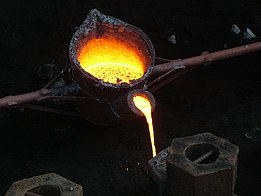
Casting is the art of shaping metals and alloys by melting, pouring the molten metal into a container called a mold, and then cooling and solidifying it according to the shape of the mold container. This method is the oldest known process for obtaining the desired shape of metals. The first casting furnaces were made of clay and layers of copper and wood were arranged in it alternately.
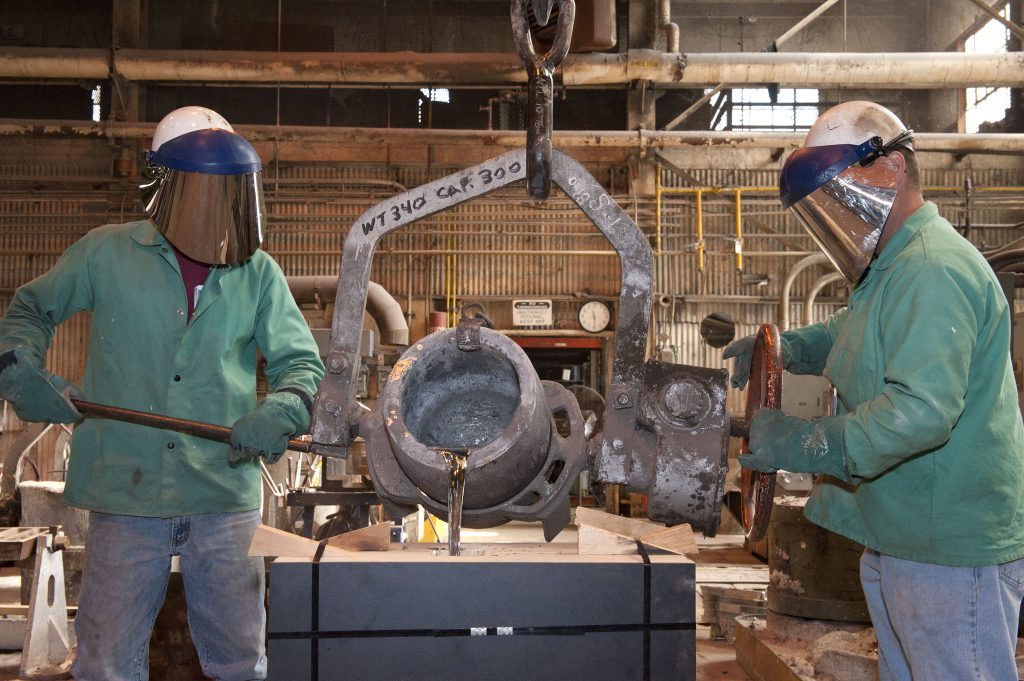
A very high percentage of manufactured goods contain at least one casting part. The size of castings part can range from a few grams and a few millimeters (such as single zipper teeth) to over 10 meters and several tons (such as large propellers or the stern frames of ocean-going ships). Casting processes are often used when the production involves complex shapes, or parts with hollow sections or internal cavities. Parts with irregularly curved surfaces (except those that can be made from thin sheet metal), very large parts, or parts made from metals that are difficult to machine are also often made by casting.
In many casting methods, a pattern is used to shape the mold and create a cavity in it in the shape of the desired part. Reusable patterns are usually made of wood, plastic, or metal, and disposable patterns are usually made of wax, plastic, or polystyrene foam. A core is also commonly used to create the internal cavities of the parts.
Casting is 7,000 years old. The oldest casting in the world is a copper frog from 3200 BC, found in Mesopotamia.
In simple terms, a foundry is a factory where castings are produced by melting metal, pouring the liquid metal into a mold, and then allowing it to solidify. It is important to note that foundries do not just produce metal products for engine parts, railroads, or pipes, but also form the components needed for the machines that we depend on to make many essential consumer products.
